
Anti-tarnish accessories have completely revolutionized the fashion world. From water-resistant rings to sweat-proof chain sets, modern accessories are engineered to resist corrosion, oxidation, and fading. However, regular exposure to body sweat, cosmetic chemicals, pollution, and natural oils can slowly deposit a film over the surface, making your favorite pieces look lifeless and dull.
Learning how to clean anti tarnish jewelry at home is the easiest way to restore the original brilliant shine of your daily accessories without stripping away their protective PVD or electroplated coating. In this detailed guide, you will discover the safest cleaning methods, everyday maintenance routines, and storage hacks to keep your collection looking brand new for years.
What Causes Dullness on Tarnish-Resistant Jewelry?
Before exploring the cleaning procedure, it is crucial to understand what makes these pieces lose their spark. Unlike regular brass or copper items that chemically corrode, high-grade anti-tarnish jewelry is usually built over stainless steel or sterling silver with advanced physical vapor deposition (PVD) gold plating.
Even though the metal core does not easily oxidize, daily buildup occurs due to several common culprits:
- Body Lotions and Sunscreens: Traps dust in necklace links and earring clasps.
- Perfumery and Alcohol Sprays: Leaves a microscopic sticky film across gemstone facets.
- Sweat Salts: Hardens over chain joints and reduces overall surface luster.
- Hard Water Deposits: Creates chalky mineral spots on metal bands.
5 Easy Steps: How to Clean Anti Tarnish Jewelry at Home
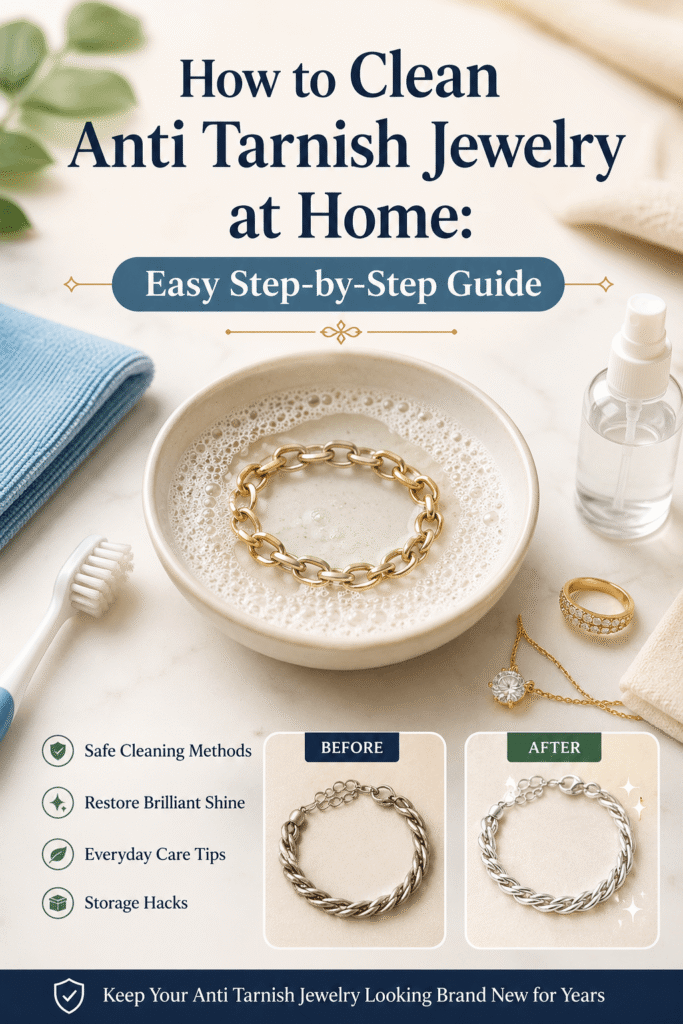
Cleaning your premium water-resistant pieces does not require harsh chemical solutions or costly ultrasonic machines. Follow these five simple steps using basic household supplies:
Required Supplies:
- Luke-warm distilled water
- Mild liquid dish soap (phosphate-free)
- Ultra-soft bristle baby toothbrush
- Clean microfiber polishing cloth
- Small ceramic or glass bowl
Step 1: Mix a Gentle Cleaning Bath
Fill a clean glass bowl with lukewarm distilled water to start the preparation. Add two to three drops of mild, pH-neutral liquid dish soap or gentle baby shampoo into the bowl. Stir the water smoothly using a spoon until light, soapy bubbles begin to form across the surface. Learning how to clean anti tarnish jewelry at home requires avoiding boiling hot water, bleach, or chlorinated tap water, as extreme temperatures and harsh chemical additives can weaken delicate jewelry adhesives, loosen embedded stone settings, and strip thin protective topcoats. A gentle, lukewarm soapy bath effectively softens stubborn cosmetic buildup, skin oils, and sweat deposits without causing any surface friction.
Step 2: Soak the Jewelry for 5 to 10 Minutes
Carefully place your tarnished necklaces, daily rings, and dainty bracelets into the soapy mixture. Let the pieces submerge completely and soak undisturbed for five to ten minutes. This short soaking phase acts as a crucial barrier step by loosening hardened cosmetic residues, sunscreen layers, and dried sweat crusts trapped deep within intricate links and stone settings. Following effective anti tarnish jewelry care tips ensures you never rush this delicate stage. Allowing the warm soapy water to dissolve oil buildup naturally minimizes the need for harsh scrubbing later, protecting your accessories from microscopic surface scratches while preserving their brilliant finish effortlessly.
Step 3: Brush Gently with a Soft Toothbrush
Take the jewelry out of the soapy bath. Using a clean, extra-soft bristle toothbrush, lightly brush around the edges, engravings, lock mechanisms, and underneath gem settings. Apply minimal pressure to prevent micro-scratches on delicate gold-plated layers.
Step 4: Rinse Thoroughly Under Clean Water
Rinse the jewelry thoroughly using lukewarm running water to wash away all loosened debris and soap residues. Safety Tip: Always plug the sink drain before rinsing to avoid accidental drops down the pipe.
Step 5: Pat and Air Dry with Microfiber Cloth
Pat each item completely dry with a lint-free microfiber cloth. Never rub harshly. Lay the pieces flat over a dry towel for 20 minutes to allow any trapped moisture inside hollow links or clasps to evaporate entirely.
Quick DIY Jewelry Cleaner for Daily Wear Pieces
If you wear chains, studs, and band rings daily, you do not need a full wash every single week. You can use a safe diy jewelry cleaner for daily wear pieces for instant sparkle:
| Method | Best For | Inactive Ingredients to Avoid | Frequency |
| Dish Soap + Warm Water | Stainless steel, PVD Gold, Cubic Zirconia | Bleach, Chlorine, Acetone | Every 2 Weeks |
| Baking Soda Paste (Gentle dab only) | Sterling silver 925 base jewelry | Heavy scrub pads, Steel wool | Once a Month |
| Microfiber Dry Buff | Daily wearable rings, Dainty chains | Chemical sprays, Rough tissues | Daily after wear |
Comprehensive Anti Tarnish Jewelry Care Tips
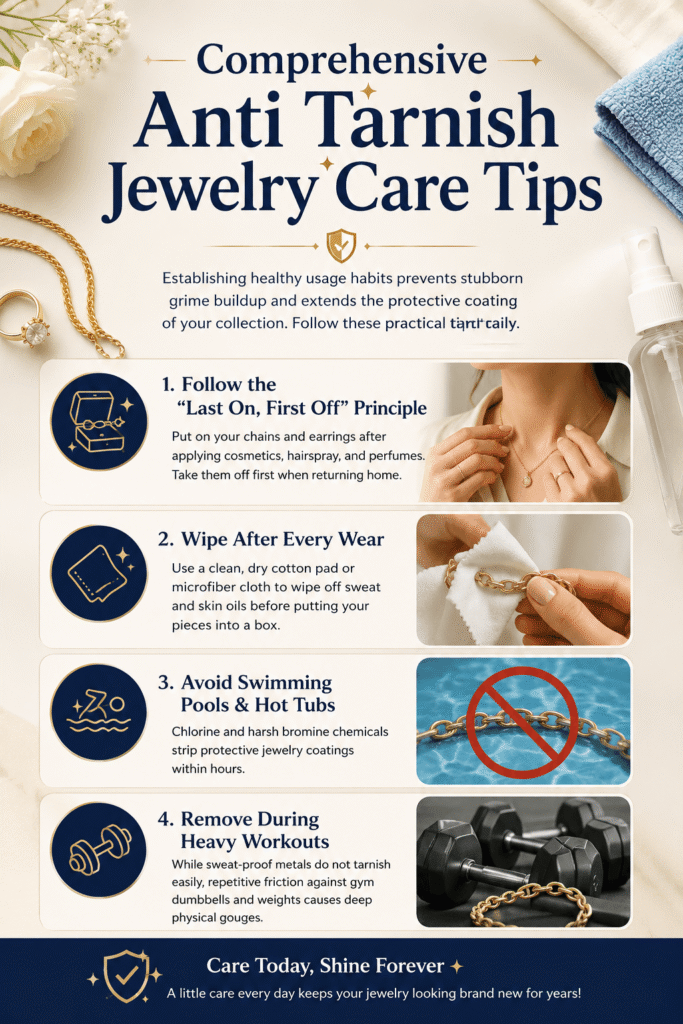
Establishing healthy usage habits prevents stubborn grime buildup and extends the protective coating of your collection. Follow these practical anti tarnish jewelry care tips daily:
- Follow the “Last On, First Off” Principle: Put on your chains and earrings after applying cosmetics, hairspray, and perfumes. Take them off first when returning home.
- Wipe After Every Wear: Use a clean, dry cotton pad or microfiber cloth to wipe off sweat and skin oils before putting your pieces into a box.
- Avoid Swimming Pools & Hot Tubs: Chlorine and harsh bromine chemicals strip protective jewelry coatings within hours.
- Remove During Heavy Workouts: While sweat-proof metals do not tarnish easily, repetitive friction against gym dumbbells and weights causes deep physical gouges.
How to Maintain Anti Tarnish Jewelry for Long-Term Shine
If you want your jewelry to last for several years, you must know how to maintain anti tarnish jewelry properly through seasonal changes:
- Prevent Moisture Exposure: Even waterproof pieces should be dried immediately if exposed to monsoon moisture or rain showers.
- Separate Plated from Non-Plated Metals: Do not store cheap alloy pieces together with premium 18k PVD gold plated or 925 silver jewelry. Chemical reactions from tarnishing metals can transfer to adjacent items.
- Avoid Chemical Dip Solutions: Never dip modern fashion jewelry into heavy industrial silver dip liquids, as the acid dissolves the protective anti-tarnish barrier.
How to Store Anti Tarnish Jewelry to Prevent Scratches
Proper storage is half the battle won against fading and surface scratches. Here is how to store anti tarnish jewelry securely at home or during travel:
- Use Individual Velvet Pouches: Store each chain, bangle, and pair of earrings in dedicated soft fabric pouches to eliminate friction scratches.
- Keep Anti-Tarnish Strips Inside Boxes: Add silica gel packets or anti-tarnish paper strips inside your jewelry drawer to absorb ambient humidity.
- Hang Necklaces Vertically: Use tree stands or jewelry organizers with hooks to keep delicate dainty chains from tangling into knots.
- Store Away from Direct Sunlight: High heat from window sills can dry out jewelry sealants and fade colored enamel work.
Can You Wear Anti Tarnish Jewelry in the Shower?
A common question among jewelry enthusiasts is: can you wear anti tarnish jewelry in the shower?
Yes, authentic waterproof accessories crafted with a 316L medical-grade stainless steel base and advanced PVD gold plating are chemically non-reactive, meaning they will not easily rust or corrode from quick shower exposure. However, daily contact with hot steam, scented shower gels, chemical shampoos, and abrasive body scrubs inevitably creates a stubborn, filmy residue across the metal surface. Over time, these bath products settle deep inside delicate chain links, causing the bright gold luster to fade prematurely.
Mastering how to maintain anti tarnish jewelry involves taking simple precautions before stepping into the bathroom. Hard minerals present in standard tap water can slowly react with plating sealants, accelerating surface wear and tear. Once you remove your chains, rings, or earrings before showering, make sure you understand how to store anti tarnish jewelry properly inside a dry, airtight box away from damp bathroom humidity. Taking off your favorite pieces beforehand keeps them sparkling, prevents costly damage, and ensures your prized accessories retain their mirror-like finish for several years.
How to Fix Tarnished Fake Jewelry and Restore Old Pieces
If you have older artificial pieces in your vanity that have already begun to discolor, you can learn how to fix tarnished fake jewelry using gentle household methods:
- Baking Soda and Aluminum Foil Bath: Line a small glass bowl with aluminum foil (shiny side up). Sprinkle 1 tablespoon of baking soda and 1 teaspoon of salt. Pour hot water and submerge silver pieces for 3 minutes to reverse oxidation chemically.
- Clear Top Coat Protection: Once an artificial piece is thoroughly cleaned and dried, apply a thin layer of specialized jewelry sealant or clear nail enamel over inner ring bands and earring posts to prevent future skin reactions and discoloration.
Q1: How often should I clean my everyday accessories?
Ans: It is best to learn how to clean anti tarnish jewelry at home and wash your pieces every two weeks to remove accumulated skin oils and lotion residues.
Q2: Can I wear water-resistant rings in the shower?
Ans: While high-grade metals resist rust, understanding can you wear anti tarnish jewelry in the shower helps you avoid soapy build-up and mineral dullness caused by hard tap water.
Q3: What is the best DIY method to restore jewelry shine?
Ans: Using a gentle diy jewelry cleaner for daily wear pieces made with warm water and mild dish soap effectively dissolves dirt without scratching delicate plated surfaces.
Q4: How should I keep my accessories safe from humidity?
Ans: Knowing how to store anti tarnish jewelry in separate velvet pouches or airtight zip-lock bags with silica gel packets prevents moisture damage and friction scratches.
Q5: Can I use regular toothpaste or vinegar for cleaning?
Ans: No, avoid abrasive toothpaste or acidic vinegar because they strip protective PVD coatings and cause micro-scratches on polished finishes.
Q6: Why does my anti-tarnish jewelry look dull after a few months?
Ans: Dullness is usually caused by surface layers of sweat, perfume, and cosmetics, which can easily be wiped away using a dry microfiber cloth.
Conclusion
Mastering how to clean anti tarnish jewelry at home ensures your favorite necklaces, rings, and earrings retain their brilliant, mirror-like finish for years without expensive professional care. By following a gentle cleaning routine every few weeks, avoiding harsh chemical cleaners, and storing each piece in a dry, individual pouch, you can easily protect your collection against dullness and daily wear. Taking just five minutes to care for your accessories keeps them looking brand new, vibrant, and ready to elevate any outfit effortlessly.