
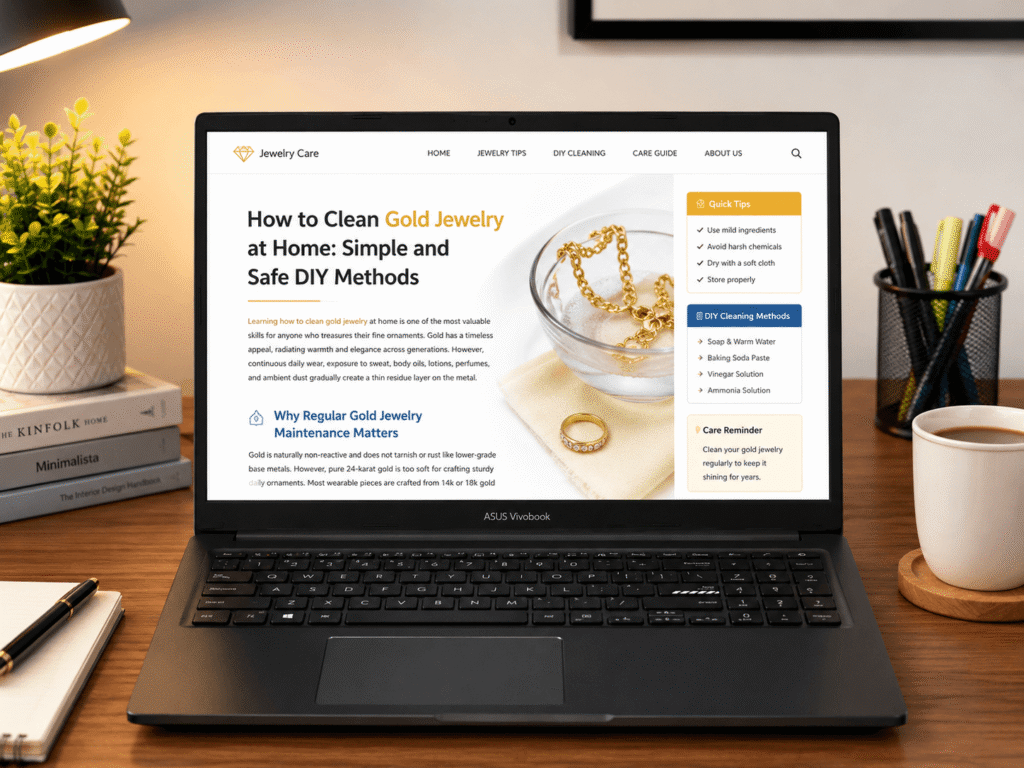
Learning how to clean gold jewelry at home is one of the most valuable skills for anyone who treasures their fine ornaments. Gold has a timeless appeal, radiating warmth and elegance across generations. However, continuous daily wear, exposure to sweat, body oils, lotions, perfumes, and ambient dust gradually create a thin residue layer on the metal. Over time, your stunning gold rings, necklaces, and bangles can look dull and lifeless.
Fortunately, restoring your precious pieces does not require expensive commercial solutions or frequent trips to a jeweler. With gentle, everyday household ingredients, you can easily restore that brilliant showroom shine while preserving the structural integrity of your collection. This comprehensive guide covers proven methods, essential precautions, and expert maintenance practices.
Why Regular Gold Jewelry Maintenance Matters
Gold is naturally non-reactive and does not tarnish or rust like lower-grade base metals. However, pure 24-karat gold is far too soft for crafting sturdy daily ornaments. Most wearable pieces are crafted from 22k, 18k, or 14k gold, which are alloyed with durable metals like copper, silver, nickel, and zinc to enhance overall strength.
Over time, these alloyed metals can react mildly with moisture, sweat, cosmetic chemicals, and airborne pollutants. Furthermore, daily oils from skin and beauty products settle into deep crevices, prongs, and intricate filigree patterns.
Learning how to clean jewellery at home properly helps protect these delicate alloy blends from premature dullness and everyday buildup. Regular maintenance also prevents skin irritation and ensures stone settings remain completely secure. Understanding these fundamentals makes discovering how to clean tarnished jewelry simple and safe, allowing your precious items to maintain their genuine showroom radiance without requiring harsh polishing treatments or damaging the metal’s natural finish.
Complete Preparation Checklist Before Cleaning
Before starting any DIY cleaning procedure, gather safe tools and materials. Using abrasive brushes or harsh chemicals can scratch polished gold surfaces and cause irreversible damage.
- Mild Liquid Detergent: Gentle dishwashing liquid or baby shampoo free from harsh phosphates and moisturizers.
- Lukewarm Water: Comfortably warm water to dissolve surface grease without shocking delicate stones.
- Extra-Soft Toothbrush: A baby toothbrush or dedicated jewelry brush with fine, rounded bristles.
- Lint-Free Microfiber Towels: Soft microfiber cloths to pat dry and buff the metal.
- Shallow Ceramic or Glass Bowls: Non-metallic bowls to prevent accidental scratching during soaking.
- Fine Mesh Strainer: A kitchen strainer placed in the sink to prevent accidental drops down the drain.
Step-by-Step Guide: How to Clean Gold Jewelry at Home
Follow this safe, 5-step standard cleaning process suitable for plain yellow gold, white gold, and rose gold ornaments:
[Soak in Soapy Water] ➔ [Gently Brush Crevices] ➔ [Rinse in Clean Water] ➔ [Pat Dry with Microfiber] ➔ [Air-Dry Completely]
Step 1: Prepare the Gentle Soaking Solution
Fill a small glass bowl with lukewarm water and add two to three drops of mild liquid dish soap. Stir gently until the soap dissolves completely. Never use boiling water, as drastic temperature changes can crack natural gemstones or dissolve adhesives.
Step 2: Soak the Jewelry
Immerse your gold rings, chains, earrings, and bangles into the soapy solution. Let them soak for 15 to 25 minutes. This soaking phase softens accumulated sweat, makeup, and dirt lodged in tiny crevices without any physical scrubbing.
Step 3: Brush Delicate Crevices
Dip your extra-soft toothbrush into the soapy water and gently clean around the clasps, undersides of rings, and intricate engravings. Use light, circular motions. Never apply heavy pressure, especially on high-polish plain gold surfaces.
Step 4: Rinse Thoroughly
Remove the jewelry from the bowl and rinse each piece under lukewarm running water. Always place a strainer over the drain or rinse inside a second bowl of clean water to eliminate the risk of items slipping down the drain.
Step 5: Dry and Buff
Gently pat each item dry with a clean, lint-free microfiber cloth. Leave the jewelry on a dry towel to air-dry completely for 30 minutes before wearing or placing it back into storage.
Handling Different Types of Gold Jewelry
| Gold / Jewelry Type | Recommended Cleaning Method | What to Avoid |
| Plain Gold (Yellow/Rose/White) | Warm soapy water soak & soft brush | Bleach, chlorine, abrasive toothpastes |
| Gold with Diamonds & Hard Gems | Mild soap soak & precision brush | Ultrasonic cleaners on fractured gems |
| Gold with Pearls & Soft Gems | Damp cloth wipe only (No soaking) | Immersion in water, hot water, soaps |
| Antique & Tarnished Pieces | Diluted soap wash & polishing cloth | Harsh chemical dips, baking soda paste |
Gold with Diamonds and Hard Gemstones
Diamonds, sapphires, and rubies are durable and handle standard soaking well. According to gemstone care guidelines, cleaning the underside restores maximum light reflection and sparkle.
Gold with Pearls, Opals, and Soft Stones
Never submerge pearls, emeralds, opals, or turquoise in water. Water can weaken pearl stringing silk or damage porous stones. Instead, dip a microfiber cloth into mild soapy water, wipe the metal sections carefully, and buff dry immediately.
5 Critical Mistakes to Avoid When Cleaning Gold
- Using Toothpaste or Abrasive Powders: Standard toothpastes contain calcium carbonate and silica, which create fine micro-scratches on mirror-polished gold.
- Using Chlorine or Bleach: Chlorine reacts aggressively with gold alloys, causing stress corrosion cracking in ring prongs and clasps. Never wear gold in swimming pools or hot tubs.
- Boiling Water: Extreme thermal shock can fracture internal inclusions in gemstones and weaken glued settings.
- Paper Towels for Drying: Wood fibers in paper towels and tissues can scratch soft gold finishes. Always choose microfiber or 100% cotton flannel.
- Over-Cleaning with Ultrasonic Machines: While ultrasonic cleaners remove dirt via soundwaves, frequent use can loosen stone settings and damage treated gems.
Expert Jewellery Care Tips for Long-Lasting Shine
Maintaining fine ornaments requires smart daily handling habits and safe methods for cleaning gold jewelry. Implementing proactive care reduces the frequency of deep cleaning sessions:
- Follow the “Last On, First Off” Rule: Apply perfumes, hairsprays, body lotions, and makeup first. Allow them to dry before putting on your gold jewelry. Remove your ornaments first when getting ready for bed.
- Remove Before Physical Activities: Take off gold rings and chains before gym workouts, sports, gardening, or household chores to avoid physical impact, scratches, and bending.
- Smart Storage Solutions: Store each piece individually in soft fabric-lined pouches or separate compartments in a jewelry box to prevent chains from tangling and stones from scratching adjacent metal.
- Moisture Control: Place anti-tarnish strips or small silica gel packets inside your jewelry storage boxes to absorb ambient humidity.
Understanding How to Clean Tarnished Jewelry and Other Metals
While standard gold alloys rarely show severe tarnish, multi-metal collections require specialized care routines. Knowing how to clean tarnished jewelry helps protect mixed-metal sets:
How to Clean Silver Jewlery at Home Safely
Unlike gold, sterling silver reacts with sulfur in the air to produce dark silver sulfide tarnish. When learning how to clean silver jewlery at home, a combination of warm water, baking soda, aluminum foil, and a dedicated silver polishing cloth delivers the best results without stripping the base silver.
Everyday Artificial and Fashion Jewelry
Imitation and fashion jewelry often feature thin plating over base brass or alloy. Avoid soaking these pieces. Wipe them with a dry or barely damp microfiber cloth and store them in airtight zip-lock bags away from sunlight and moisture.
Step-by-Step Summary: Cleaning Gold at Home
1. Prepare: Mix lukewarm water with 2-3 drops of mild liquid soap.
2. Soak: Place gold pieces in the solution for 15-20 minutes.
3. Brush: Use an extra-soft toothbrush on detailed areas.
4. Rinse: Clean under lukewarm water with the drain plugged.
5. Dry: Buff dry using a soft microfiber cloth.
Proven Strategies for At-Home Jewelry Maintenance
Adopting a systematic approach toward fine ornament care ensures that delicate pieces retain their brilliance for decades. When you master how to clean gold jewelry at home, you also gain the practical knowledge required to manage other metal types across your personal collection.
Implementing consistent jewellery care tips not only preserves aesthetic value but also prevents long-term structural wear. Routine maintenance helps identify loose stones, bent prongs, and weak clasps before an ornament suffers permanent damage.
[Inspect Mountings] ➔ [Select Method] ➔ [Apply Gentle Cleaning] ➔ [Store Securely]
Effective Approaches for Mixed-Metal Collections
Many modern collections feature combinations of gold, platinum, and sterling silver. Understanding how to clean tarnished jewelry correctly depends on matching each solution to the underlying metal:
- Sterling Silver vs. Gold: Understanding how to clean silver jewlery at home requires addressing oxidation, which differs from gold maintenance. Silver benefits from mild polishing cloths—especially for styling intricate pieces like a silver indian necklace set—whereas gold requires gentle soapy degreasing.
- General Home Cleaning: Mastering how to clean jewellery at home involves using non-abrasive, pH-neutral solutions that safely remove grime without etching polished surfaces.
- Routine Polishing: When cleaning gold jewelry, prioritize microfiber buffing over chemical dips to maintain the authentic finish without metal loss.
Long-Term Value and Safety Recommendations
To keep valuable ornaments safe, avoid storing different metal purities together in the same box. Placing 22k gold alongside 14k pieces or heavy gemstones can cause surface abrasion. Using individual velvet pouches, silica gel packets, and dedicated compartments will ensure that every cleaning session keeps your ornaments looking pristine.
Q1: What is the safest way for cleaning gold jewelry without scratches?
Ans: Soak pieces in warm water with a few drops of mild soap for 15 minutes, brush gently with a soft baby toothbrush, and buff dry with a microfiber cloth.
Q2: Is the process different when learning how to clean silver jewlery at home?
Ans: Yes. Unlike gold, knowing how to clean silver jewlery at home focuses on removing black tarnish using silver polishing cloths or gentle baking soda methods.
Q3: What are the most important daily jewellery care tips?
Ans: Essential jewellery care tips include applying perfumes/lotions before wearing jewelry, removing ornaments before sleeping or swimming, and storing pieces in separate pouches.
Q4: Is it safe to learn how to clean jewellery at home using household items?
Ans: Yes, learning how to clean jewellery at home is completely safe using mild dish soap, lukewarm water, and a soft cloth without harsh chemicals.
Q5: Does this method explain how to clean tarnished jewelry quickly?
Ans: Yes, discovering how to clean tarnished jewelry starts with a gentle soapy soak to dissolve oils, followed by a soft polish to restore natural shine.
Q6: Can I use toothpaste or boiling water on gold ornaments?
Ans: No. Toothpaste leaves micro-scratches on polished surfaces, and boiling water can loosen glued settings or crack delicate stones.
Conclusion
Keeping your precious gold collection sparkling does not require harsh chemicals, abrasive dips, or expensive professional equipment. By mastering how to clean gold jewelry at home using simple lukewarm water and mild soap, you can safely dissolve daily oils, dust, and product residue while protecting delicate metal prongs and settings.
Consistently practicing smart daily jewellery care tips—such as applying perfumes first, removing ornaments before sleep, and storing each item separately—ensures your ornaments retain their natural brilliance, luster, and craftsmanship for years to come.